Petscop is one of those stories that I tend to view the same way Patricia Taxxon sees "Don't Hug Me I'm Scared" -- meaning that the way people talk about it tends to leave me a little frustrated, because I think that people get too bogged down in trying to "solve" the narrative and picking apart the details in a very Literal way and wind up losing the core themes of the story. I think that Petscop is a story that deals more in metaphor and non-literal narrative than most people take it, and I don't think you're necessarily supposed to interpret Everything exactly as it appears on screen to us. Ultimately, I'm less interested in what Petscop literally is as A Video Game, and more interested in how the narrative as a whole makes me feel.
That said, Content Warnings for: Psychological and Sexual Abuse, Trauma and PTSD, Suicide, Child Death, Child Neglect, Memory Repression and DID/Plurality. I also don't have any kind of summary attached to this page, so if you haven't already watched through Petscop, you're probably going to find this essay more baffling than enlightening.
Petscop is a story that centers very heavily around the theme of Trauma. It centers around a somewhat straightforward plot of the main character, Paul, discovering an old game in his house that leads him down the rabbit hole into uncovering a family history of abuse -- most specifically focused on the abuse of a young girl referred to as "Care", that was enacted by her father Marvin. There's a fair amount of focus given to Care as an individual, but it also serves to call attention to the ripple effect that trauma can have on the Family Unit as a whole. The way family members can be affected by each other's traumas, the ways different people can have different perspectives and interpretations of what happened and what to do next, the threats both direct and indirect that trauma leaves people more vulnerable to.
I think that the story as a whole functions the best when you take it all a little loosely. Elements can be disparate and contradictory, the timeline is muddied and confusing -- this isn't a showcase of bad writing, but a constructed narrative that very much falls in line with trauma narratives in general. It's shrouded in repression and secrecy, leading to confusing, mixed-up memories and blended metaphors, all further muddied by the profound lack of rational logic behind abuse and trauma in itself. I think this serves to highlight the narrative being told here, but if you think it's kind of a copout then that's up to you! There are definitely more literal interpretations of the story out there for you to peel apart instead. I do actually really like Sagan Hawkes' video on the series if that's more your cup of tea.
A lot of people tend to focus on the game as a literal, coded creation. I think it's better viewed as a narrative device without necessarily getting too bogged down in the details of it. The game both is and isn't a literal thing, simultaneously a creation of Rainer (an older cousin of Care's, and the older brother of another child, Mike) and an intangible representation of the trauma that pervades Paul as an individual and his family as a whole.
The game both is and isn't literal -- Schrodinger's Narrative Device. Which is to say, I think that the game functions very consistently as a stand-in for Trauma as a whole. Perhaps Rainer really did turn the game he'd started making as a gift for his little brother into a giant expose on Marvin's actions, but I think it's frequently more important to focus on the game as a manifestation of the trauma in itself -- the way all of the different traumatizing actions and traumatized individuals intersect with and effect each other.
Lina's death or disappearance being a traumatizing event Marvin was unable to move past, something he uses to justify his abuse of others. Anna, perhaps, being affected by it in her own way -- too aware of the negative impact this event had on Marvin, leading to her complicity and making excuses for the actions he took. Belle and the other victims compounding that trauma. Mike's death compounding that trauma. Rainer's desire to seek revenge against Marvin and expose him as an abuser compounding the trauma. Care/Paul's abuse at Marvin's hands compounding that trauma. Rainer's suicide and the rest of the family finding his corpse compounding that trauma. Paul/Care repressing that trauma altering the shape of it; Belle confronting that trauma altering the shape of it; the family trying to censor the evidence in an attempt to preserve reputation altering the shape of it; Paul's eventual coming to terms with his own abuse altering the shape of it, and so on and so forth.
The game is a manifestation of a Family Trauma -- constantly passed around, rewritten, compounded, altered, and mixed-up by every individual member who was involved and affected by it. Those that were abusers, and those that were abused, and those that were complicit, and those that were innocent bystanders -- Trauma has a ripple effect; it doesn't just remain contained. The varying Demo versions of the games not exemplifying machine learning or alternate dimensions or timelines, but the varying experiences and perceptions of the same core traumatic events. The narrative is constantly shifting, developing, rewriting itself, lapsing in on itself, because it's a Family's trauma -- altered and compounded by multiple people, rather than just a single victim. Care's mother's perception of the "Jill, stop fucking around" // "Care, this is mommy" conversation being different from Care's experience of the conversation being different from Paul's eventual recollection of the conversation, all of which struggle to align with one another in ways that are comprehensible or consistent.
The Demo's are two-fold, to me. On one hand, a kind of visual manifestation of the unreliability of memories, specifcally traumatic ones. Very functionally speaking, every time you recall a memory, it is altered by your brain accessing it -- memory is not an objective fact, it is constantly being recontextualized, or shifted, or misplaced, or forgotten, or misremembered. This is a reality that is only worsened when the memories are traumatic in nature, given that the trauma often comes with new, unpredictable elements like lapses in time, dissociative fugue, memories that weren't properly encoded at all, or the memories being repressed or out of order. A narrative that cannot be objective because it is encased in an unreliable medium. Memories that you attempt to navigate in hindsight, with the adult perspective you've gained over time, but that remain always what they were -- impossible to truly change.
On the other hand, I think that they're a way to show the constantly repeating cycle of abuse. In no way do I think that Care was Marvin's only victim. I think it goes beyond Belle and Mike as well. I think it's very likely that Marvin's abuse against Care was something that he had repeated multiple times, over and over again, with a variety of children over a long stretch of his life. "I have a guess at which child you'll pick next." I think it's likely that each Named Demo version of the game we see is a representation of one of Marvin's victims -- which can have an effect on the "Family Trauma" regardless of whether or not the other victims were Literally Family (see the Belle section below).
The act of Playing the game often reads, to me, as a metaphor for confronting or coming to terms with the abuse. Contrast the statement from Petscop [] where a dialogue box says that Belle's PlayStation has been on for 153822 hours against Paul's claim that he'd just found Petscop in his house recently. Belle never repressed her memories of the abuse, but Paul did -- she never turned her PlayStation off, but Paul lost the game cartridge entirely. I think this also ties into Paul's statement that his mother was the one who had the game after 2004 -- perhaps referencing the idea that Anna did eventually acknowledge and confront the fact that her husband was abusing her daughter, instead of continuing to ignore it. Ownership of the game started with Rainer and/or Belle, and has been slowly passed around the family ever since.
The idea of Rebirthing tends to get a lot of attention, both in terms of the Candace Newmaker murder and the notion that it is a literal thing that does actually take place, where Care is a reincarnation of Marvin's childhood friend, Lina. There's a lot of effort put into trying to understand what rebirthing is, how it works, and what Marvin does in order to Do it to Care and other children. I tend to think this is something of a waste of time.
Rebirthing is a Euphemism. Specifically, a euphemism for the sexual abuse that Marvin perpetuates against Care and other children. It's a fiction that Marvin creates for himself -- an excuse he uses to justify his abuse to himself and to his victims, and a euphemism that Rainer allows the game to engage with in an attempt to disarm Marvin and try to get him to slip up.
The first real mentions of it in Petscop 9 underlines this to me. "You must have guessed, but I was looking through your things. [...] Years later, your friend was reborn as your daughter. Your wife won't admit this is true, but I know it, because I found the evidence." Rainer is using a passive voice in order to pretend to engage with Marvin's euphemistic excuse, he isn't saying he found proof that Lina was literally reincarnated as Care. He's saying that he found proof that Marvin has been abusing Care.
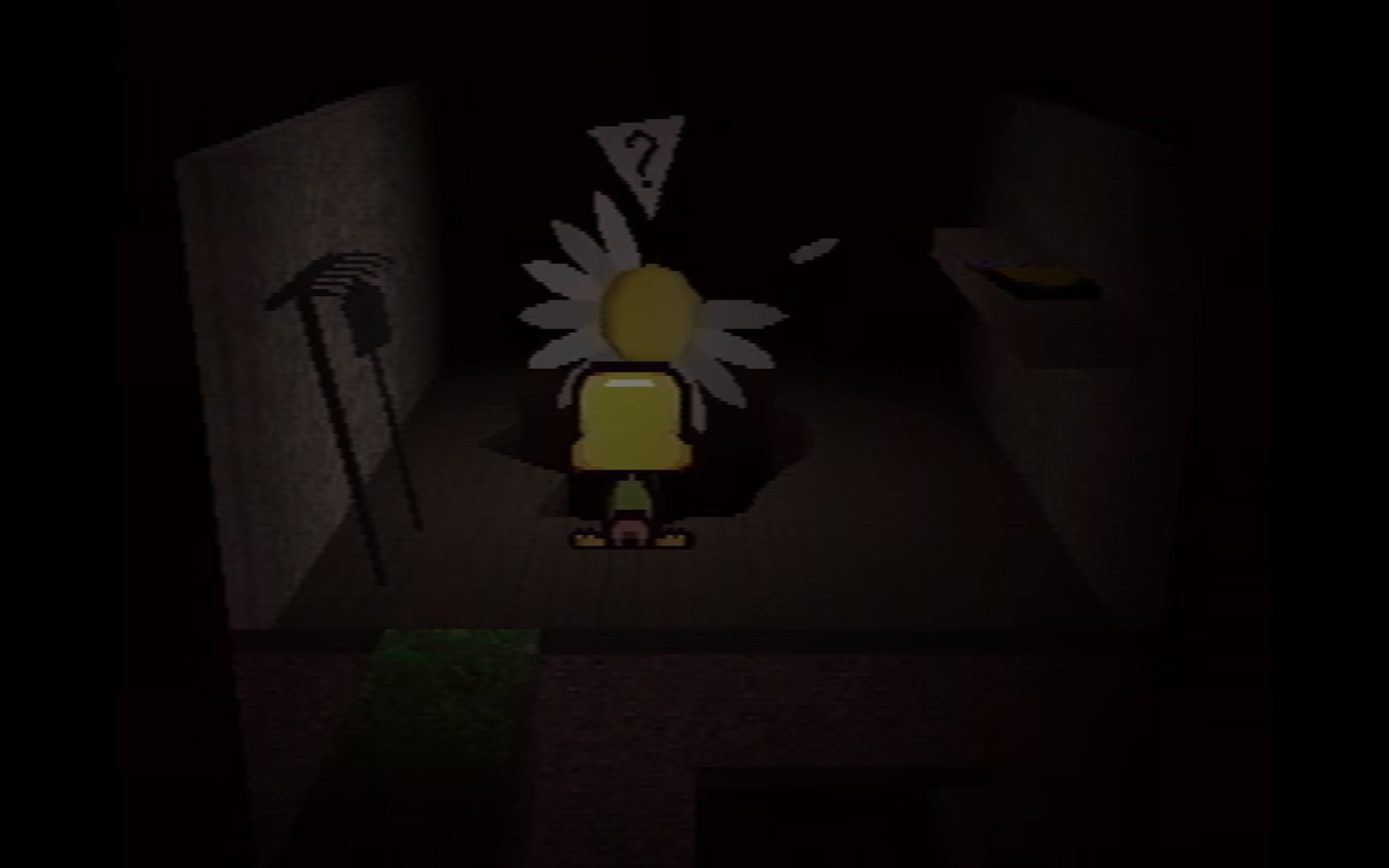
Petscop 3 also includes the note "Your wife says, "Care isn't growing any eyebrows." You say, "That's a puzzle." You're secretly very excited to hear this news. You're in the bathtub thinking about her. I have a guess at which child you'll pick next." This is even more explicit. Especially in conjunction with the events of Petscop 2, with the plucking of the flower petals. This tends to get a lot of attention as a reference to the Dr. Suess "Dasiy-head Maizey" book, but I think this is a visual metaphor of "Deflowering", as in a sexual assault. The reference to Care's lack of eyebrows is double-sided, I think -- on one hand, an abstract visual connection between Care and Lina; on the other hand, an implied visual Metaphor for Care being groomed for the abuse, and/or her plucking her own eyebrows, perhaps out of stress, or at Marvin's behest.
Marvin isn't trying to actually "do" anything productive or tangible with the idea of "rebirthing". This isn't a project that has an achievable end, it's the exact same kind of manipulation he uses when talking to Care about her appearance after he abuses her. The concept of "rebirthing" is what he uses as justification before the abuse takes place (both to himself and to Care, as in: convincing himself that he's absolved of guilt because Care isn't "a child", she's Lina, and convincing Care that it's her fault this is happening -- a more psychologically complex version of "You were asking for it"), and the threat of "Do you see that? Look at how ugly you are Now. [...] Nobody wants to see you like this." is what he uses to manipulate her into staying quiet after the assault has ended.
I also think it's important to pay attention to the mentions of Marvin's wife that these passages include. Specifically, the way she is portrayed as being oblivious and/or ignorant. "Your wife won't admit this is true, but I know it, because I found the evidence." I'll go more in-depth into Rainer's goals and intentions later, but it feels fairly obvious that Rainer tried to show this proof to Care's mother, and he was dismissed. He doesn't note that Care's mom "doesn't know" that this is true, he specifically says she "won't admit" that it's true.
People tend to take her later dialogue line: "Care! Are you okay? You ran straight into the door! Did you think it was open?" as a literal version of events, but it stands out to me as a callback to the somewhat common trope of abuse in fictional narratives being covered up with an "I walked into a door" lie. I think this has less to do with alternate timelines folding in on each other, and more that it's further evidence that Anna spent a not-insignificant amount of time refusing to admit to what Marvin was doing to Care. Not out of a sense of malice towards Care, necessarily, but because she can't bring herself to confront the reality of what that means, and ignores it out of a sense of self-preservation that leaves her complicit to the abuse.
She notices Care's lack of eyebrows, but doesn't put the pieces together regarding Marvin's grooming. She won't admit that something terrible is happening between Marvin and Care, even though Rainer has proof. When she sees more explicit, inescapable evidence of the abuse, she lies about what she saw in order to keep the illusion going. I don't necessarily see this line about the door as a hint towards alternate timelines, I see it the same way I see the Demo versions of the game as a whole -- as distorted memories, being dissociated from reality, and active hiding of the truth.
Rainer is notably the creator of the Petscop game, and he gets a lot of recognition for that, but I think people tend to kind of... overestimate his agency in the narrative, maybe? Rainer is not one of the adults -- when Paul tries to think back and remember who Rainer is, he remembers an older kid, someone older than he was, but who was still sitting at the kid's table. Whatever agency Rainer might have had as someone older than Care/Paul, is undermined by the fact that all the adults still consider him one of the kids. He's too old to be someone Marvin is putting in danger, but he's too young to save anyone. The game is representative of Rainer trying and failing to bring any of the adults' attention to Marvin's repeated abuse, he's trying and failing to force Marvin to confess, and barring that, is trying and failing to force Marvin to feel at least a sliver of the pain and distress Marvin caused these children. Trying, and failing, and ultimately killing himself out of a combination of guilt and resentment. "Fuck all of you, and fuck me as well. Go check your bathroom." "None of you believed me, and ultimately that means I didn't do anything to help either. Fuck all of us."
If Marvin is both a family member, and a prominent member of a local school's staff, then this puts him in a position that would make it difficult for a lot of people to believe it when he's accused of being an abuser. If Marvin did have a hand in Mike's death, I think this could make the situation even worse. We never necessarily get a lot of clarity on what exactly killed Mike, but it is heavily implied to have been a car accident. If this was a genuine accident, and one Marvin had a hand in (possibly a different kind of parallel to Lina -- "They didn't see her.") If Mike's death was accidental, and everyone knew it, then Rainer going on to accuse Marvin of profound abuse could have very easily been dismissed by other adult's as a teenager's angry, grieving attempt at "inappropriate" revenge. This turns Rainer's grief into just another thing Marvin is able to manipulate -- another tool used to further harm Marvin's victims. Rainer's own protests ignored, the evidence he manages to find dismissed, and perhaps even if the younger kids tried to talk about the abuse themselves, they could also be dismissed as just more of Rainer's machinations -- the same way that the Petscop game seems to have been created by Rainer to seek revenge against Marvin, only for Marvin to twist the game until it becomes a tool of further abuse against Paul. Petscop starts off as a game Rainer was developing for his younger brother to play, and that love was twisted by grief into something to be weaponized against Marvin, only for Marvin -- as a more respected, older, and more experienced manipulator -- to turn it back around against the children he abuses.
The idea that the note from episode ?? "My husband may come here after 6:00 pm. Please stay overnight if you can. Thank you so so much." may have been directed at Rainer specifically is its own kind of painful. Just further evidence that Rainer had tried to protect Care, but failed. The fact that the game locks Paul's player character in a closet before it plays the cutscene were Marvin kidnaps Care further builds up this idea: Rainer tried to protect Care, but he failed, because Marvin is older, and more experienced, and more prepared than Rainer is. Despite his best intentions, he's still left -- over and over again -- to be a helpless observer to the abuse and murder of his younger cousins: too old to be in danger, too young to help anyone. Even if Rainer did make sure to stay overnight, and attempted to keep an eye on things; he thought Care was safe in her upstairs bedroom. Left watching the front door, while Marvin snuck around back with a ladder to get upstairs without being noticed.
I think people tend to overlook how tragic this is, and how thoroughly Rainer is affected by being stuck in this position of complete helplessness. I think that parts of the in-game text are Rainer's attempts to reconcile and cope with the implications of the abuse he's witnessing, and failing, because he's a grieving, isolated, and ignored teenager. "She'll appear from the darkness limping, and I'll shoot her in the head" -- I think this imagery from Petscop 3 ties directly into the ultimate Care B description where Rainer describes Care returning home and the fact that he was the one who answered the door that night. "It's so dark that I can't see her. So I pull her out, and the light hits her face. And they won't even give me a picture of her now." -- Rainer describes what actually happened that night in the Care B description, but the note in Petscop 3 is, perhaps, a very grim look at what he wishes he'd done. Rainer is mired in hopelessness, and even though Care has been "saved" from Marvin, he doesn't see her as capable of "healing" from the trauma of what happened, because he can't see himself as ever healing from everything that has happened. "It makes me think about the dog actually. Because when the car hit him I thought "at least it will be over soon." He survived it, and I was the only one who still wanted to put him down." Rainer is talking about Care, but the emotions he's trying to articulate are the ones he is feeling. His own notion that it's better to die than have to live with the ongoing trauma and repercussions of everything that happened -- a mentality that fuels his own suicide.
I think there are a few instances where Rainer essentially puts words in the mouth of other characters, like Care and Mike, because they aren't around to speak for themselves (Mike because he died suddenly and without warning, and it's likely that Care is gone as well. The line "And they won't even give me a picture of her now." implies she's not around, which could make sense given the post-credits scene that implies someone came for Care/Paul and got them out of the family's house when they were younger. The timeline in this series isn't well-established; it's very possible that could have taken place before Rainer's suicide.) I think the "When the emergency began, you were all looking for Care A. I told you all, we would never find Care A. When Care A goes missing, she goes missing forever. My brother didn't want us to find him, because he knew we were all looking for Michael A. I'm back. This is my present for you. I started it in 1996, for Marvin. If you think they're worth any effort, see if can save Care B or Care NLM. Care B is in the school, of course. Fuck you all, and fuck me as well. Merry Christmas. Check your bathroom now." is another example of Rainer's own grieving pessimism at play -- all too aware of how trauma can change a person, but unable to see any hope in recovery. By the end of the game's development, Rainer doesn't just blame Marvin for the abuse, he blames Marvin, and the other adults for being willfully-ignorant and complicit, and himself for not being able to sway anyone into taking him seriously. Rainer doesn't see a way out of things anymore; he doesn't see there being a chance for recovery or redemption for anyone. Fuck you all, and fuck me as well -- as much as I tried to help, I couldn't protect any of them. I do think Rainer killed himself in the family's bathroom, both to metaphorically "put down the dog" in regards to himself, but also arguably to deliberately traumatize the rest of the family that had ignored him into taking him seriously posthumously. Kind of a last-ditch effort -- a hopeless kind of hoping.

Belle is a notable character because she is implied to have suffered abuse similar to Care at Marvin's hands. She's also someone who is able to be Present when Paul plays this game, but she is never really portrayed as someone who can effectively help him play, or play it for him.
A lot of Belle's off-screen dialogue seems to imply that she's trying to very gently coax Paul into confronting some of the implications that arise as he plays through the game. Like in Petscop __ when Paul says "And I remember you saying that we were -- that are Are -- uhm, exactly the same age." and "I do agree there's a resemblence."
Belle is someone Marvin also abused, but who "almost" made it through the rebirthing process but ultimately "failed". I wonder about the implications of this -- did she get too old for Marvin to find compelling as a victim? Or is it possible that she did tell someone about the abuse? I feel it's possible the post-credits ending could imply this: Someone Marvin abused, who was able to get help, and who was there when Paul was taken from the family's house and given the opportunity to grow up without being buried in that toxic environment. A "Quitter". Someone older than Care, someone abandoned for someone younger and easier to access. "I have a guess at which child you'll pick next."
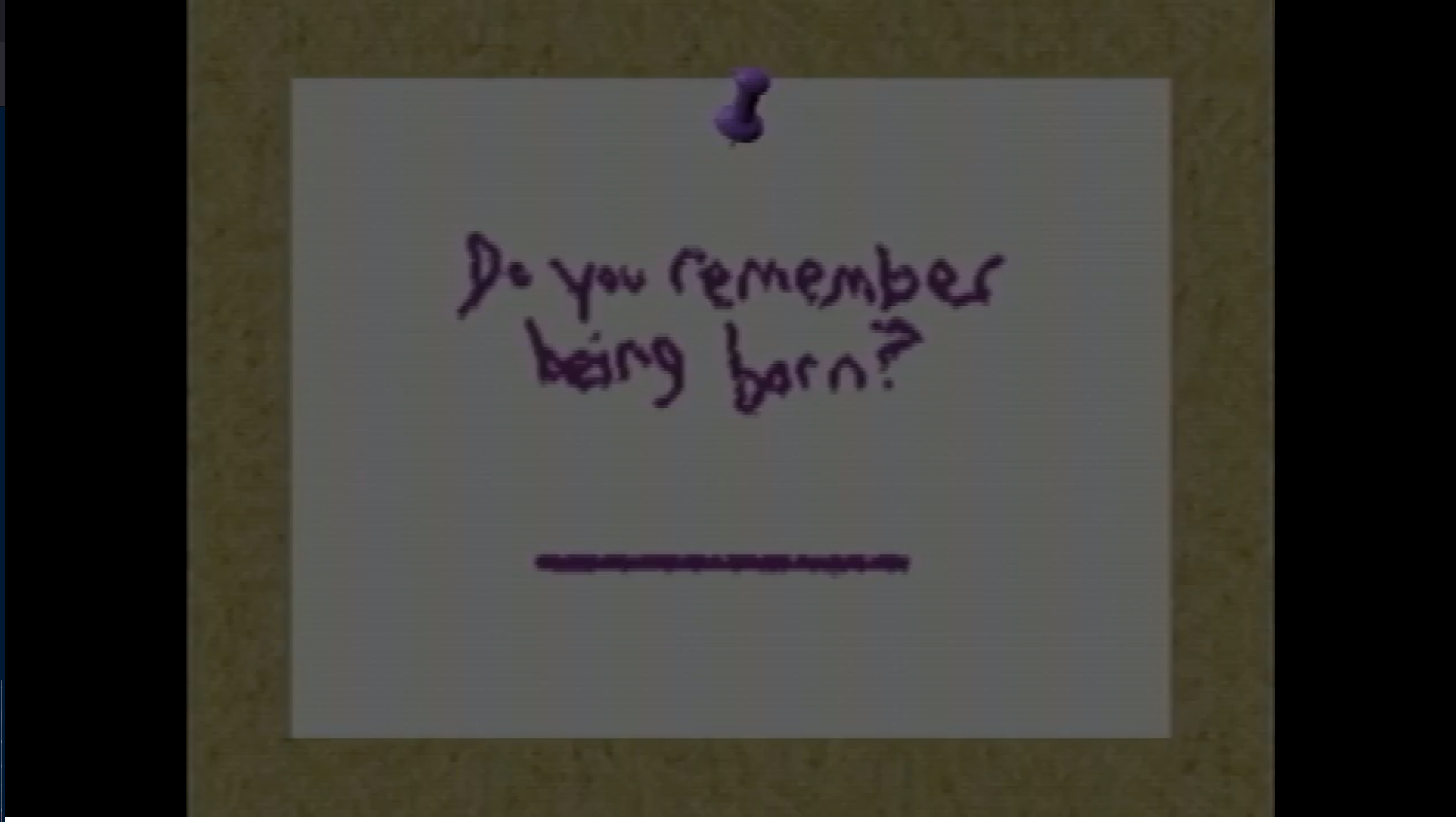
The Do you remember being born?" line gets a lot of focus as an extension of the notion of Rebirthing, but it always stands out to me as something differnet. Something trying to alert Paul to a problem, especially since it appears so early on in the narrative.
A twofold question: Does Paul remember his childhood at all? Additionally/Alternatively: Does Paul remember "being born" -- as in, "splitting", the way alters in DID split off from their host. Does he realize he's missing huge swathes of memory and context from his childhood? Does he remember when he stopped being Care, and started being someone else? I think it's also somewhat significant that we find this question in the Quitter's Room with Belle. "Are you ready to confront the things we don't talk about?"
I think that the supposed sentience of the game, specifically Paul's reaction to that idea, also serves the System!Theory well -- when exploring your own brain/memory, you don't necessarily expect for pieces of it to respond autonomously. The game is supposed to be pre-programmed // it's supposed to be Just You in your brain. Paul responds with surprise that the game attemps to "fake" being haunted, and establishes the parameters by which he believes would Prove the game would actually Be haunted, which the game then meets and exceeds. Or, Paul denies his systemhood, and then as time goes on, he's forced to confront these separate pieces of himself.
And this idea involves pretending that this door, right here, this one, is open, rather than closed. You can see that it's closed, but what I'm going to do, is, I'm going to picture in my head, that this door is actually open right now" to me, seems to be language that references moving on without actually moving on; repressing memories as a coping mechanism (pretending the door is open), and moving through life under that illusion, despite the evidence to the contrary. Or, as the game also states: "To catch her, you had to lie, but it may not be a lie forever. You're the Newmaker. You can turn Care NLM into Care A, and close the loop." Paul "catches" Care NLM in the game by "lying" to her -- changing the number on the treadmill (ie, the flower petals) to "-1". Paul doesn't remember the abuse he endured as Care as a child -- this repressed history is a "lie", the -1, as if the abuse never happened. That's how Care as Paul survived into adulthood, via repression and denial. But, the game says, it may not be a lie forever -- you can heal what you forgot, and move on, instead of remaining confused and traumatized.
"There were signs along the way that I ignored. Because it would've been a completely ridiculous idea to me." and "But I don't know how that magic trick works, exactly." also kind of serve this idea to me. The longer Paul plays the game, the less he's able to rationalize away the things he's noticing in his life and memory that aren't matching up, the more he begins to remember that he's forgetting, so to speak. It's fairly common for people's symptoms to get "worse" after they realize that they're a system, because they're able to finally pay attention to the discrepensies and disconnections that the system was covering up prior to the realization.
"I sure hope you've realized by now. It doesn't matter how long you've been gone. It doesn't matter how much you've changed. You aren't lose. Stop wandering, and come home." -- this line could possibly be Care's mom's reaction to "Care" coming home as "someone else"; someone changed by the trauma of the abuse and kidnapping. An alter. "Care"/Paul struggling with new mannerisms, behaviors, and symptoms -- unable to act like Care A, pushing to be recognized as whoever they are now, nad Care's mother insisting that they aren't, they're just Care, because she recognizes them externally as Care, regardless of how they feel internally. She remembers what they were, and wants them to "stop wandering" and "come home" -- stop behaving like this, and go back to how you Were. "Stop wandering, and come home" also has a similar inflection to, perhaps, "Stop playing around." A mother that doesn't necessarily want to admit that something is Wrong. Care is home, and her mom wants her to be Just Care (A), struggling to contend with the idea that the trauma isn't something that can be so easily pushed aside and forgotten about.
The Petsop 17 disovery is, perhaps, an iteration of the game more focused on Paul's system. I've seen people say it looks like phasing between player input and machine learning modules, but I think it's interesting how the two phases seem to be "The Paul Player Character we identify with" and "The Paul Character we've seen from an alternate perspective"; the inconsistent, aimless wanderings of the Alternate Paul characters contrasting with the more concrete actions taken by the Identifiable Paul Player Character... Maybe a sort of split view between Paul's Exterior and the inner workings of his system; the idea that there are other alters besides Care and Paul, keeping up constant background noise, thoughts, and actions as Paul goes through their life as the host that replaced Care.
That's what makes the "I know what you must be thinking. Have these statements always been true? Or have I cursed you? Is there such a thing? A curse that changes your past?" so unnerving to me. (Side: YES, I know most people tend to interpret these dialogue boxes as belonging to Rainer, but I don't think that makes sense, as it seems to speak in complete contradiction to what we know about Rainer and the way he speaks/views the events that have taken place. For one, they don't seem to fit his style of writing, which is usually aimless, angry, and accusatory. Instead, this dialogue is tonally gentle and condescending, shifting into something more threatening/ominous as it continues. The entire game is as kind of living document -- I think it's likely that there is text in the game that Rainer found/overheard, rather than things he wrote himself.) Not only does this line parallel the exact same psychological aspect to the abuse that Marvin was perpetuating, but it also strikes at a very dissociative note to me. "Do you remember being born?" // "A curse that changes your past?" -- the notion of a system's alter replacing the previous host and being established as the new one. Care A becoming progressively more traumatized and unable to cope, until eventually Paul replaces Care as the system host.
"The ghost room is a ship in a bottle." -- Not AI or Machine Learning, but a memory holder perhaps? Not an AI trapped in a game, but an alter trapped in the moment of abuse, who hasn't established a reality outside of it. A system member whose role it is to "play Petscop full time"; constantly aware of the trauma and constantly contending with it to prevent it from effecting Paul. If you look at it under that lens, then it's possible to interpret the episode 16 "No player input has been detected" warning as a kind of metaphorical alert that Paul's system is throwing out -- the further he delves into the "game" of Petscop, and uncovers the real world events that it contends with, and the weight of those events in his own life, the system role begins to fall out of whack. They aren't holding the memories and keeping them from him anymore, Paul is slowly recovering those memories -- confronting them and becoming aware of the fact that there is a system behind him. Perhaps an integration? Or at least just that the things Paul is finding out is making it harder for the system to work as it has been, perhaps causing some dangerous stumbling blocks as that progresses.

People seem to broadly interpret that Gravediggers scene with the counselor as a kind of net-positive. Something affirming for Care to be told. I tend to disagree with this interpretation pretty strongly, actually. The thing about therapists in fiction is that they're typically written as a Net Positive -- someone who is always actually capable of helping you work through your trauma and is in the narrative to fill that specific role. The thing about real therapists, though, is that they're varied and distinct from each other, and a lot of them are actually not very good at the job they're supposed to be doing.
(Ask me how I know...)
Given the themes of Petscop, I would actually find it fitting for the therapist to be someone else who is ultimately complicit in the abuse, someone who didn't make it better, and may well have made it worse. There are plenty of therapists out there who Claim to be trauma-informed, but aren't actually, and their input/perspectives on abusive/traumatic situations can actually serve to Make Them Worse (again, ask me how I know).
I think it's noteworthy that the Counselor's dialogue is seemingly just as fixated as Marvin is on Care's sense of reality: "I hope to guide you to that location, with a spell, which I will begin now: You are a girl named Carrie Mark, and you were born on November 12th, 1992." Marvin tried to manipulate and force Care into fitting the template of Lina, because that is what he wanted from her. This therapist seems to be doing the exact same thing, in a more complex way: trying to force Care/Paul into fitting the template of Care A, or even just Care B, because that is what they want from her -- ignoring the reality of who Paul/Care is in favor of trying to get her into a shape that will be easier to treat with more simpler, traditional therapeutic methods, instead of having to admit that they're out of their depth and refer the family to a different therapist.
The actually explicit Counselor scene later only seems to underline the idea that this is a therapist who isn't actually trained in the ways they'd need to be in order to actually help Care heal. Statements like "Kids shouldn't say swear words. Do you know why? It just doesn't sound right. It's disturbing. You should choose cleaner words, even when you're really angry." and "Everything you see will become real. Everything you say will become the truth." that seem to echo Marvin's abuse more than they seem to be anything actually helpful. Policing the way that Care acts (Marvin trying to get her to "become" Lina / the Counselor in trying to get her to "behave appropriately"), insulting her appearance/mannerisms (Marvin in telling her that she's irredeemably ugly / the Counselor telling her that children swearing is Disturbing), trying to forcibly establish the parameters of her sense of reality (Marvin with the notion of rebirthing / the Counselor with the notion of her path through life). These methods are more focused on forcing Care to act healed, not in actually doing any work to help her actually heal or feel healed. They are, in essense, retraumatizing her more than they are treating her.
Perhaps this effort is what further contributes the family's complicity, denial, and "censoring" of the abuse. Rainer says "Care B is scared and pounding on the door. I open it. It's so fark that I can't see her. So I pull her out, and the light hits her face. And they won't even give me a picture of her now. And I'm a piece of shit. Here I go." -- I think it's likely that when Care seemingly "forgot" about the trauma, the family was all too willing to play into that illusion, possibly encouraged by the therapist. I think the shovel that appears in that dialogue box from Rainer isn't necessarily literal, but is another metaphor. With everything buried under the carpet, everything "seems" okay, but Rainer disagrees. But he's also young and inexperienced, and it's his ideas against the supposedly trained Therapists -- Rainer knows the illusion of peace can't last, and the wounds are festering under the surface, but he feels guilty and selfish about digging things up, but he can't live with himself if he doesn't. He also just can't live with himself if he does. He knows that he feels that it has to be dug up, but with everyone else trying to convince him it's better to keep buried, he doesn't know for Certain that what he's doing will lead to anything good. I think that's the meaning of the final egg's description -- he knows that, ideally, something good will come from digging things up, but he's still stuck in that hopeless, traumatized place himself because neither the family or the therapist are actually helping anyone heal. "? You should start thinking about that." -- Rainer doesn't actually know what it would look like to be healed. Which is why he ultimately kills himself.
I don't really have a strong conclusion for this page. I might come back and try to articulate some more thoughts on it eventually, but this is what I have for now. This page has been in my drafts for a while and I'd like to get it out of there! If you haven't watched Petscop yet, I do recommend it. It's an interesting little piece of Unfiction! Here's a link to the series on YouTube.